
 +38 044 383-03-46
 Cost calculation
Issues of ventilation in hotels – it is primarily a question of guests’ comfort, therefore – increasing their loyalty and, perhaps, their desire to return or recommend the hotel. However, the hotel business is a business that needs a constant profit, a quick return on investment and a guarantee of return on investment. Therefore, the ventilation of all rooms must be energy efficient.
Supply and exhaust ventilation systems with heat recovery (recuperators) are gaining popularity. These ventilation units are used both for centralized ventilation and for decentralized ventilation. Their main difference from the gravitational (natural) ventilation is the possibility of controlling the quality and volume of air entering and leaving the room. In today’s rapidly growing competitive hotel service market, simply ensuring quality air exchange in rooms is often not enough. It is important that ventilation is energy efficient, and thus helps to save energy resources (and therefore money).

When choosing between a centralized type of ventilation and a decentralized system, all factors must be taken into account.
Energy efficiency. Energy savings when using a central ventilation system with heat recovery reaches 50-70%. With decentralized ventilation this figure reaches 90%.
Features of rooms. The hotel is a system of rooms of different purposes: rooms, lobby areas, corridors, restaurants, laundry and technical rooms, covered parking lots. Only a decentralized ventilation system can provide a personal microclimate in all types of rooms.
Noiselessness. Hotels most often have the style of a comfortable place to stay. Developers of PRANA recuperators created a ventilation system with minimal noise. Working in a night mode, such ventilation does not disturb the rest of hotel guests.
Ease of operation. Centralized ventilation systems mean the presence of one air handling unit and a network of ventilation channels. Decentralized system implies the location of different types of equipment for a balanced microclimate of all types of rooms. In case of technical failure, such a system requires less cost and time to fix it.
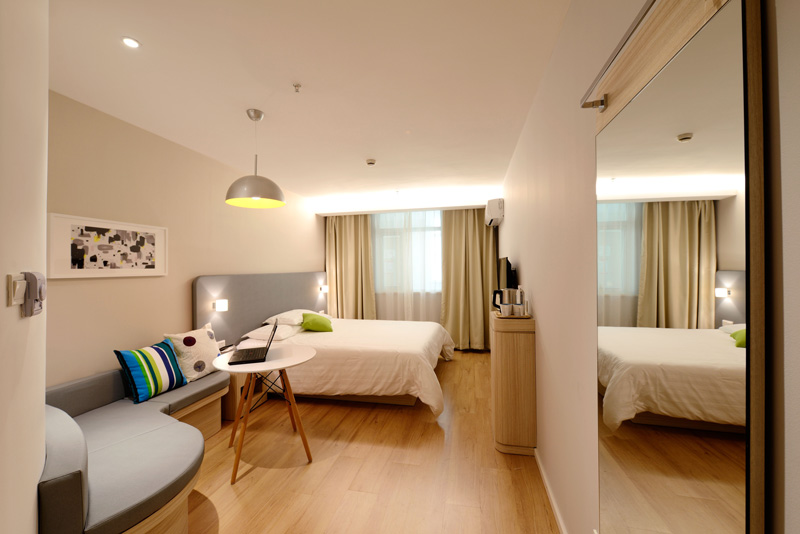
The most optimal in terms of guest comfort and energy efficiency of the hotel’s decentralized ventilation system. Supply and exhaust ventilation with heat recovery allows you to control the air flow and air exchange volume in all parts of the accommodation and creates a comfortable environment where it is not necessary (not energy efficient) to open windows. For the hotel, the effect of competent ventilation will manifest itself in the form of savings on heating in winter and additional air conditioning in summer.